


















Advantages of HJT Solar Cells
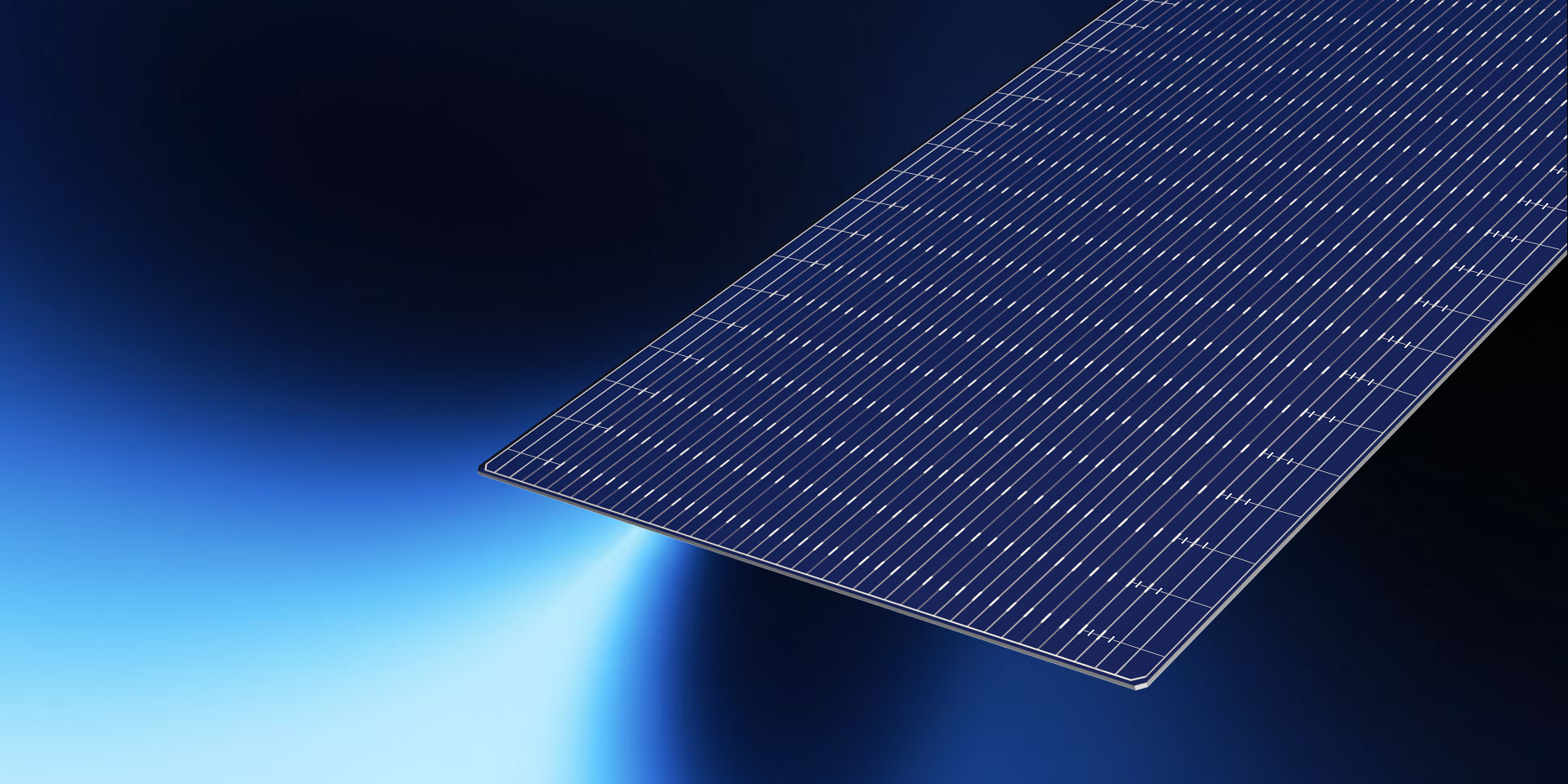
Heterojunction (HJT) solar cells feature a naturally symmetric structure, offering a theoretical efficiency close to the limit of crystalline silicon. Dinto Solar’s HJT cells achieve 26.9% efficiency. Compared with other photovoltaic technologies, HJT cells provide higher bifaciality, lower degradation, and a simplified four-step manufacturing process that enables the use of thinner wafers while significantly reducing carbon footprint. With copper-metallized HJT (C-HJT) technology, silver is replaced by copper plating, lowering material costs while further enhancing efficiency and reliability—delivering high-performance, sustainable solar solutions.
1 / 4
4-Steps
HJT technology requires only four core process steps, significantly fewer than the more than ten steps required for TOPCon and BC technologies. This results in higher yield, lower energy consumption, and improved process controllability.
HJT / C-HJT
4 Steps
TOPCon / BC
10+ Steps

Texturing & Cleaning

PECVD

PVD

Metallization Patterning
Thinner Silicon Wafer
90-110μm
HJT / C-HJT
Silver-free Solar Cell Manufacturing



Silver
155 kg CO₂/kg



Copper
3.97 kg CO₂/kg
- Silver-free C-HJT mass production cuts the carbon footprint of copper to just 2.56% of silver, significantly lowering overall emissions.
- Copper delivers electrical conductivity and mechanical strength comparable to silver, yet is 1,600 times more abundant and costs only one-tenth as much — making it an ideal, sustainable choice for the solar industry.
DINTO SOLAR HJT CELLS
G12 HJT Cells
27%
Champion Efficiency
110-130μm
Wafer Thickness
Copper Grid Cells
27.2%
Champion Efficiency
110-130μm
Wafer Thickness