












 Back to List
Ask HJT | What Makes PIB Butyl Sealant the Key Moisture Barrier in HJT Modules?


In the pursuit of higher efficiency and longer lifetime for heterojunction (HJT) solar modules, some of the most critical technologies are often the least visible. Among them is a material that quietly safeguards module reliability for more than 25 years while enabling new photovoltaic architectures for the future.
That material is polyisobutylene (PIB) butyl sealant, widely used as the edge-sealing material in advanced photovoltaic modules. For simplicity, we refer to it as PIB sealant, or butyl sealant.
In this installment of Dinto Solar’s Ask HJT, we explore the key properties that make butyl sealant an essential component in advanced module encapsulation.
Q1: Which metric makes butyl sealant the “moisture barrier” in HJT modules?
A. Ultra-strong adhesion
B. Low water vapor permeability
C. High temperature resistance
D. High elasticity
The Fundamental Parameter Behind Moisture Protection
Extremely low water vapor permeability is the physical foundation of butyl sealant’s value in photovoltaic modules. Its molecular structure forms an exceptionally dense polymer network that acts as a highly effective barrier against moisture diffusion.
According to the industry specification TCPIA 0130-2025, photovoltaic-grade butyl sealants must achieve a water vapor transmission rate of ≤0.3 g/(m²·24 h), while leading products can reach values below 0.01 g/(m²·24 h).
This performance can be two orders of magnitude better than conventional materials, effectively extending the timescale for moisture intrusion to well beyond the typical 25-year design lifetime of solar modules.
✅Correct answer to Q1: B
Q2: Beyond moisture protection, which property of butyl sealant can directly increase module power?
A. Higher light transmission
B. Improved heat dissipation
C. Replacing busbars to cut shading
D. Reducing cell-to-edge clearance
The “Spatial Efficiency” of Module Design
Butyl sealant also exhibits extremely high electrical insulation, with a volume resistivity exceeding 10¹⁴ Ω·cm. This allows it to function as a waterproof solid insulator in the module edge seal.
Because of this property, designers can safely reduce the insulation distance between the solar cell and the glass edge. The additional space can then be used to expand the active light-receiving area of the cells.
By increasing the module’s active area ratio, this optimization can contribute more than 5 W of additional power per module in certain designs.
✅Correct answer to Q2: D
Q3: Perovskite tandem solar cells are often described as the future of photovoltaics, but their commercialization faces major stability challenges. What role will butyl sealant play?
A. Enabling colored PV façades
B. Replacing lead iodide absorber
C. Reducing weight for satellites
D. Providing edge moisture sealing
A Shared Reliability Solution for Next-Generation PV
Perovskite solar cells are far more sensitive to moisture and oxygen than conventional crystalline silicon technologies. As a result, encapsulation becomes a critical factor determining their long-term stability.
Butyl sealant is currently one of the few materials capable of delivering the ultra-low moisture ingress required for decades-long operation, making it a key enabler for future commercialization.
Encapsulation solutions already optimized for HJT modules—such as butyl sealant combined with dual-glass structures—are expected to be directly compatible with HJT-perovskite tandem technologies.
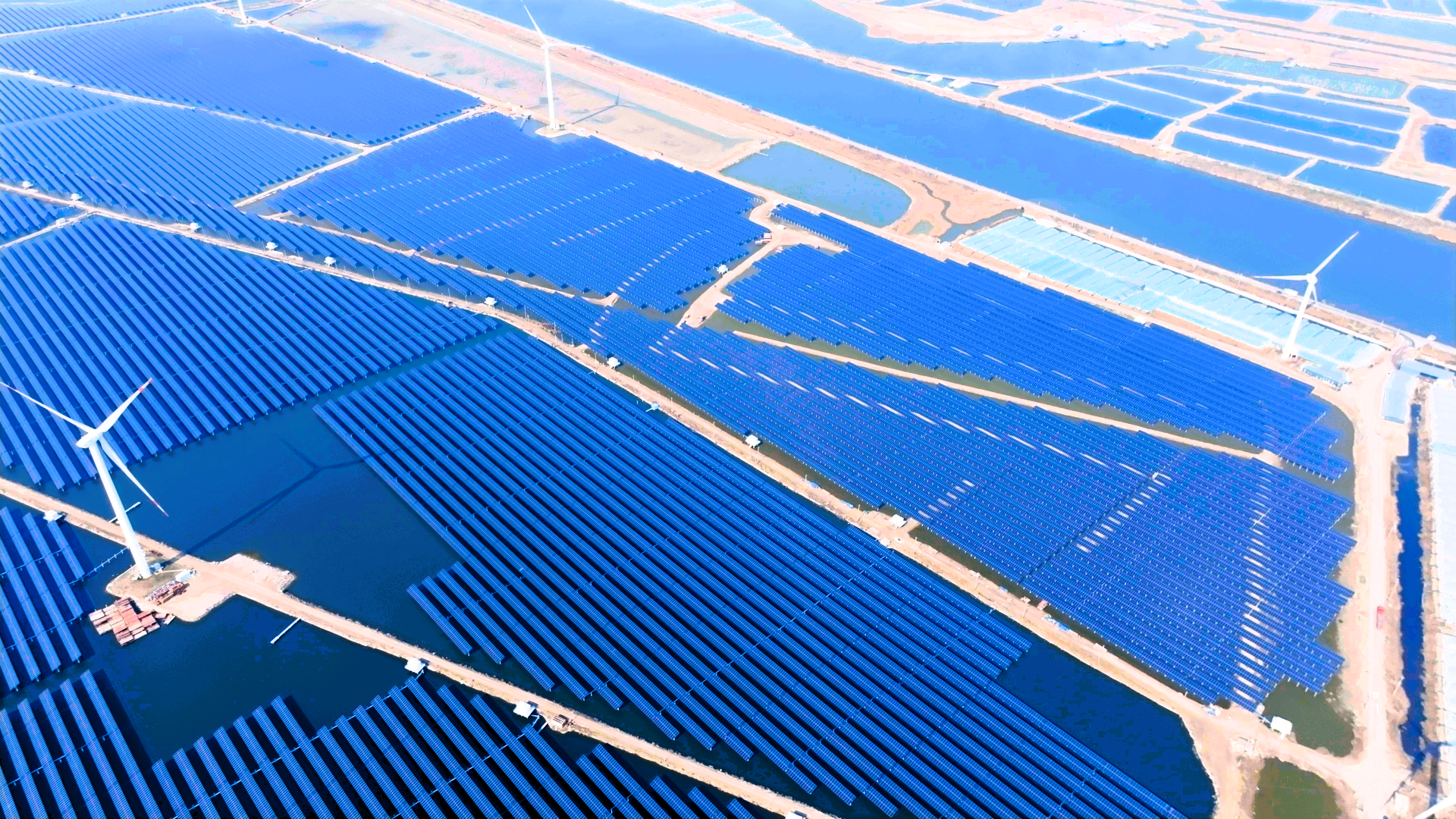
Whether deployed in utility-scale power plants, floating PV systems, or future space-based solar applications that demand extreme durability and radiation resistance, butyl sealant remains a critical component in protecting next-generation photovoltaic technologies.
✅Correct answer to Q3: D
What begins as a seemingly simple edge-sealing material has become a key element in the evolution of photovoltaic technology.
From safeguarding the lifetime of every solar cell to enabling emerging technologies such as tandem photovoltaics, butyl sealant demonstrates a fundamental truth of solar engineering: true innovation often starts with reliability.
We welcome you to share your own insights on heterojunction technology or let us know which HJT questions you would like us to explore next. Selected topics will be featured in future installments of Ask HJT.