


















 Back to List
Ask HJT | How Double-Layer AR Glass Improves Solar Module Performance?


While much attention is given to advances in solar cell technology, one critical step is sometimes overlooked: before sunlight even reaches the cell, it has already passed through its first optical interface—the module glass.
At this interface, part of the incoming light is inevitably lost. The evolution from single-layer to double-layer anti-reflective coatings is not just an incremental upgrade, but a structural improvement that enhances both optical performance and long-term durability.

In this installment of Dinto Solar’s Ask HJT, we take a closer look at how double-layer anti-reflective (AR) coated glass contributes to high-efficiency solar modules.
Q1: What is the primary purpose of coating PV glass?
A. Improve appearance
B. Reduce reflection losses
C. Increase glass strength
D. Reduce glass weight
Optimizing the First Optical Interface
At the air–glass interface, differences in refractive index typically cause around 4% of incident light to be reflected.
Anti-reflective coatings are designed to suppress this loss through optical interference effects, effectively increasing the amount of light transmitted into the solar cells.
A single-layer AR coating can raise glass transmittance to approximately 93%, resulting in more than 2.5% gain in module energy yield.
✅Correct answer to Q1: B
Q2: What is the key breakthrough of double-layer AR coated glass?
A. Eliminates all reflection
B. Cuts cost by over 50%
C. Makes glass flexible
D. Broad-spectrum AR + durability
Engineered for Both Optics and Durability
The performance advantage of double-layer AR coated glass lies in its engineered structure:
Dense base layer
Acts as a protective barrier, improving adhesion and limiting moisture ingress, which enhances coating durability.
Porous top layer
Functions as a broadband anti-reflective structure, improving light transmission across a wider spectral range—particularly in the 800–1100 nm region.
Together, these layers create a synergistic effect: higher average transmittance, improved utilization of long-wavelength light, and stronger resistance to environmental degradation over time.
✅Correct answer to Q2: D

Q3: How does double-layer AR glass help reduce LCOE? (Multiple choice)
A. Particularly suited for harsh environments such as high humidity and strong UV exposure, helping reduce long-term degradation and protect energy yield
B. Delivers the same level of power gain across all solar cell technologies
C. Enhances both initial module power and long-term reliability with a relatively limited material upgrade, improving lifecycle value
D. Acts as a platform-level technology that integrates seamlessly with innovations such as 0BB and cell segmentation designs, enabling synergistic performance gains
A Three-Dimensional Value Proposition
Enhanced environmental protection
HJT solar cells are sensitive to moisture and oxygen. The dense base layer improves barrier performance, helping protect the TCO layer and silicon interfaces and supporting low degradation under harsh conditions.
Sustained performance gains
HJT cells exhibit strong response in the long-wavelength region. Improved transmittance from double-layer AR coatings enhances current generation while maintaining long-term optical stability.
Synergistic system-level gains
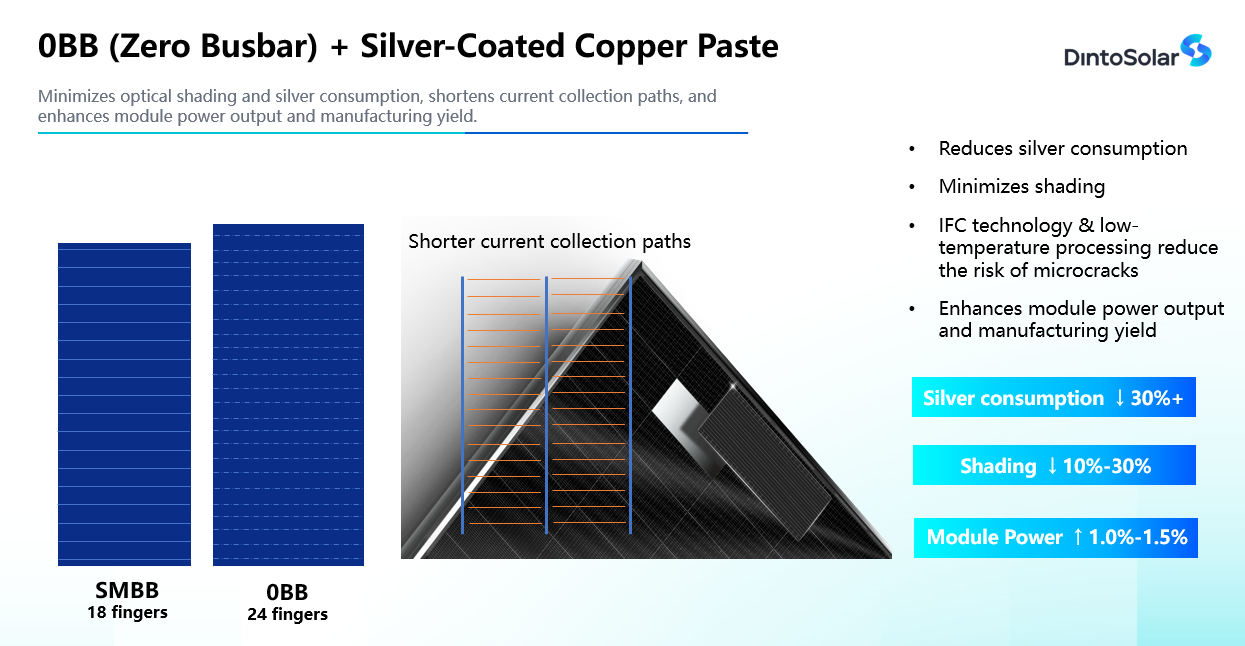
As a platform-level optical upgrade, double-layer AR coated glass integrates seamlessly with advanced technologies such as 0BB (busbar-free design) and multi-busbar configurations, amplifying both efficiency gains and long-term reliability.
✅Correct answers to Q3: A, C, D
At a critical stage in the commercialization of HJT technology, double-layer AR coated glass has become a key enabler of both high performance and long-term reliability.
By improving initial power output while maintaining stable optical and structural properties over time, it helps unlock the full potential of HJT solar cells across the entire lifecycle of a photovoltaic system.
We welcome you to share your own insights on heterojunction technology or let us know which HJT questions you would like us to explore next. Selected topics will be featured in future installments of Ask HJT.