














 Back to List
Ask HJT | Why Does HJT Technology Deliver Inherently Low Degradation?


Degradation of the modules has always been one of the defining variables in solar project economics. LID, PID, UV exposure, thermal cycling, mechanical stress—each mechanism gradually reduces energy output. The question is: can degradation be addressed at its root, rather than mitigated after the fact?
In this installment of Dinto Solar’s Ask HJT, we explore how HJT technology is engineered with an inherent advantage—delivering low degradation not as an add-on, but as a built-in characteristic.
Q1: Why are HJT cells inherently resistant to conventional LID (Light-Induced Degradation)?
A. HJT cells are manufactured without light exposure
B. HJT uses n-type silicon wafers (phosphorus-doped), eliminating boron-oxygen defects
C. HJT cells are coated with a protective layer
D. HJT cells are significantly thicker than conventional cells
Built-in material advantage
Light-induced degradation (LID) shows up in real projects as first-year power loss, directly impacting yield and asset value. Conventional mitigation strategies such as reducing oxygen content or switching to gallium doping often come with added cost or process complexity. HJT addresses the issue at its source. By using phosphorus-doped n-type silicon, it avoids the formation of boron-oxygen defects, which are the root cause of LID in p-type cells.
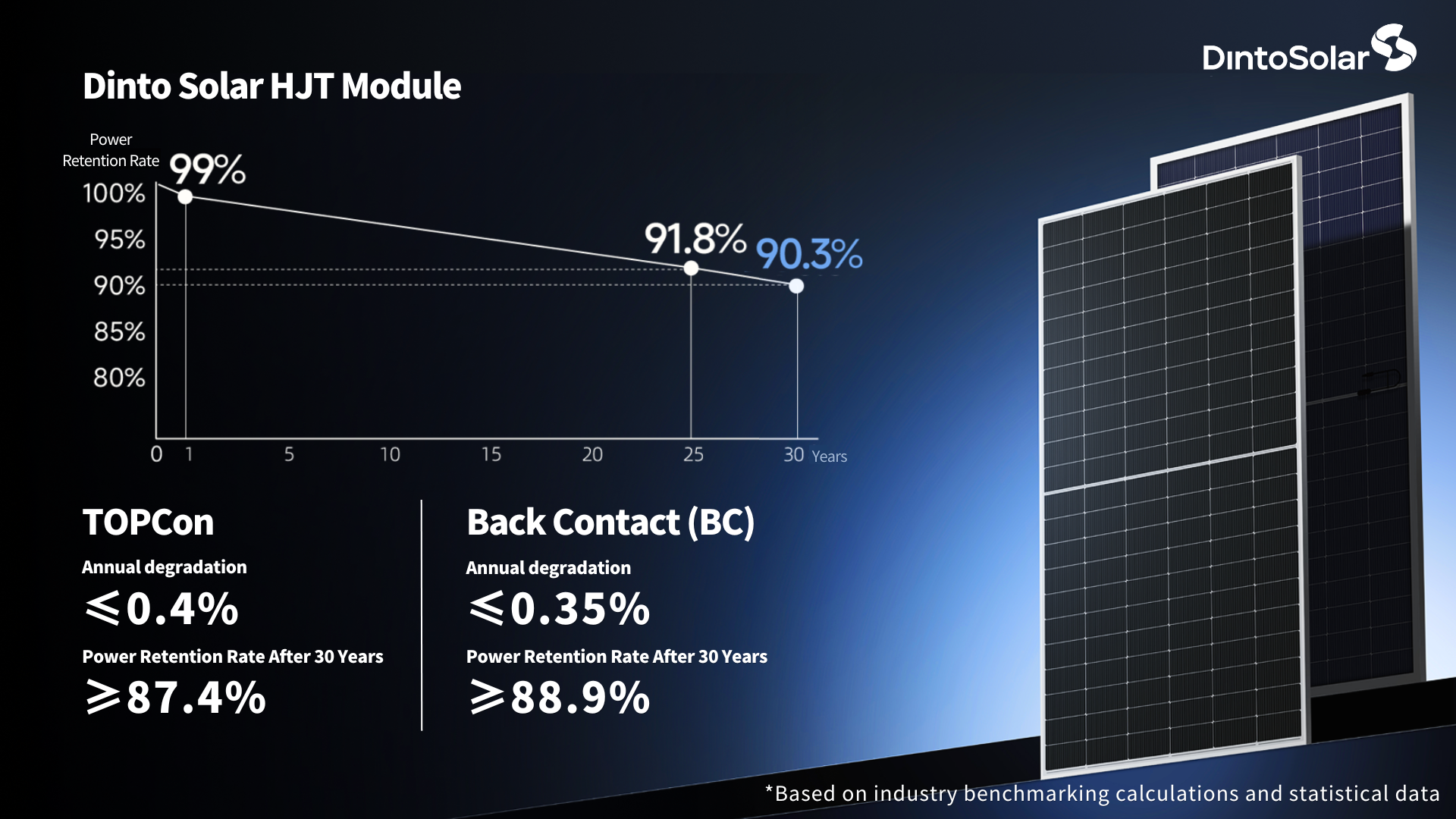
With this degradation pathway removed at the material level, low degradation becomes an inherent characteristic rather than a result of additional processing. This forms the basis for performance benchmarks such as <1% first-year degradation and ≥90.3% power retention over 30 years.
✅Correct answer to Q1: B
Q2: How does the TCO layer in HJT cells fundamentally prevent PID (Potential-Induced Degradation)?
A. TCO absorbs charged particles and neutralizes them
B. TCO fully metallizes the cell surface for conductivity
C. TCO blocks system voltage
D. The conductive TCO layer replaces insulating films, preventing charge accumulation at the source
Designed for structural resilience
Potential-induced degradation (PID) typically occurs under high system voltage in harsh environments such as high temperature, humidity, and salinity. In conventional modules, sodium ions (Na⁺) migrate from the glass and accumulate at the cell surface. Interactions with insulating layers like SiNx lead to charge buildup and significant power loss.
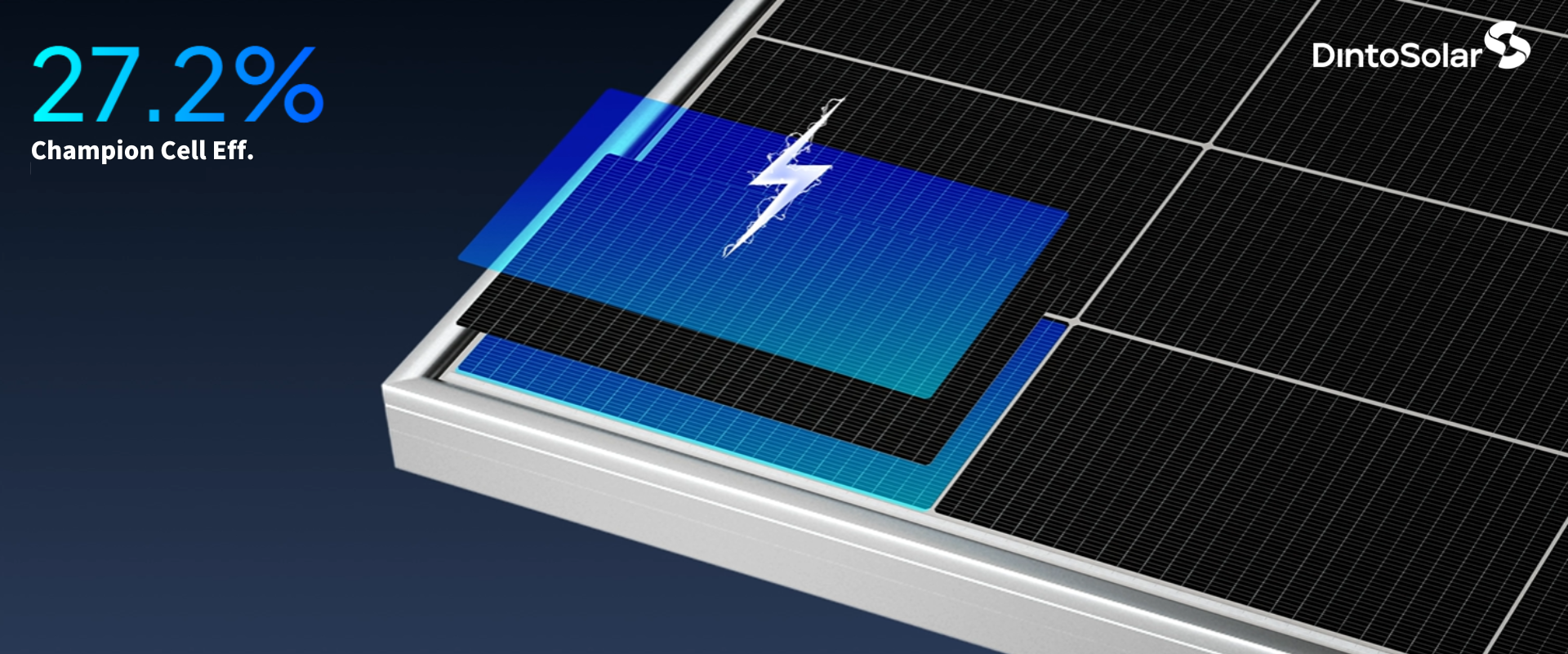
HJT takes a different approach. It replaces the insulating layer with a conductive TCO film, which prevents charge accumulation at the source. Without charge buildup, the risk of conventional PID is substantially reduced. As a result, HJT delivers inherent resistance to PID at the structural level.
✅Correct answer to Q2: D
Q3: In real-world operation, which environmental factors contribute to module degradation? (Multiple choice)
A. Extreme heat and high irradiance environments (e.g., deserts)
B. High salinity and humidity conditions
C. Sand abrasion, snow load, and hail impact
D. Thunderstorms and electrical stress
Validated under real-world stress conditions
Solar modules operate in highly variable and often harsh environments. Elevated temperatures accelerate material fatigue, salt mist drives corrosion, wind-blown sand erodes glass surfaces, and snow loads or hail impact can induce microcracks. Electrical stress during storms further adds to long-term performance risk.
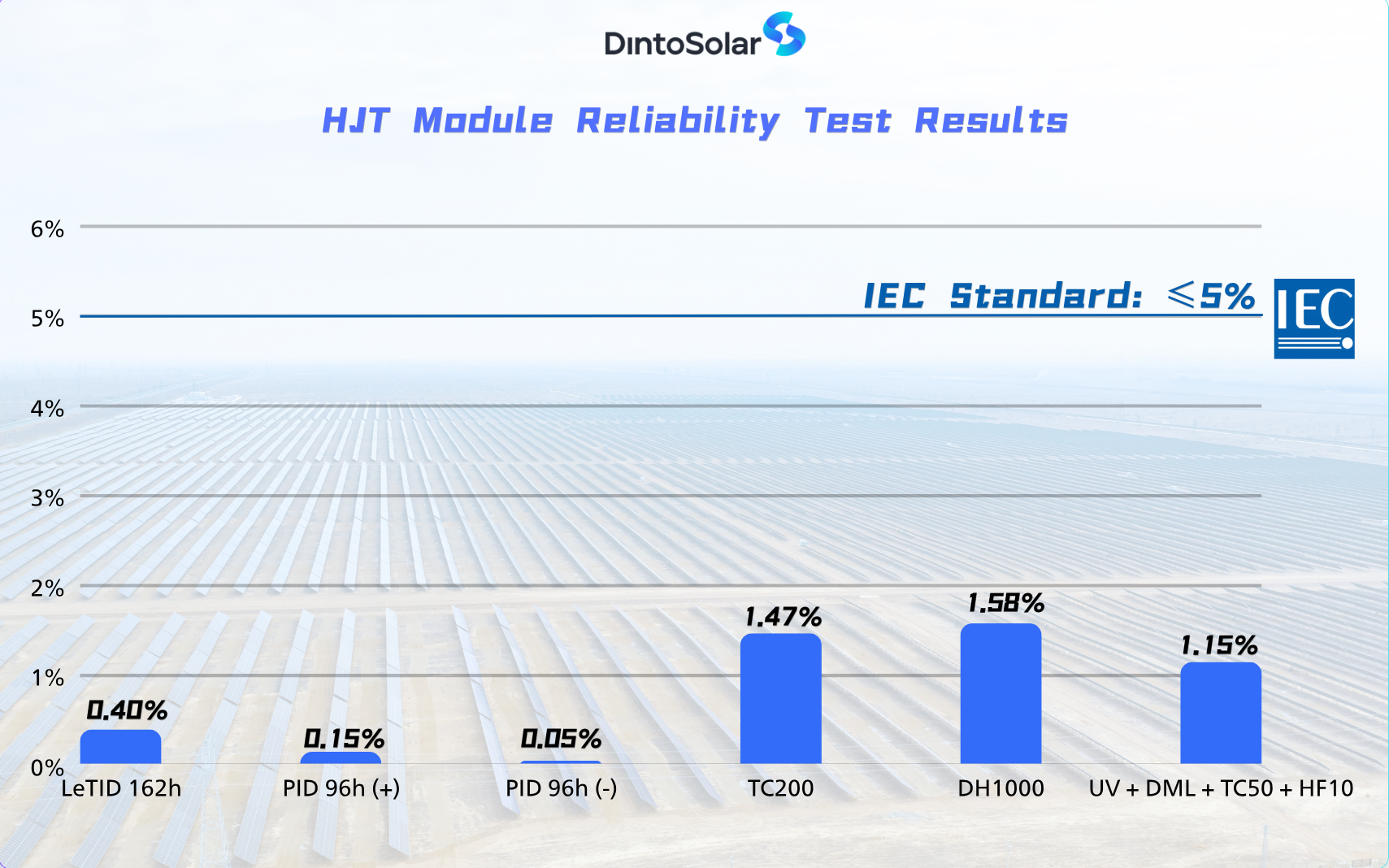
To ensure stability under these conditions, HJT modules are engineered with durability in mind and validated through systematic reliability testing. Enhanced test sequences—including double mechanical load, HF10 humidity-freeze, TC200 thermal cycling, and DH1000 damp heat—simulate prolonged exposure to real-world stressors. Across all tests, degradation remains well below the IEC 5% threshold, demonstrating strong resistance to environmental stress.
✅Correct answers to Q3: A, B, C, D
For investors, degradation is ultimately a financial variable that shapes long-term cash flow, where even small improvements translate into meaningful gains in lifetime energy yield. HJT’s advantage is driven by a system-level design that integrates materials, structure, and reliability from the outset, resulting in inherently stable performance.
With <1% first-year degradation and ≥90.3% power maintained over 30 years, Dinto Solar delivers predictable and sustained value across the full lifecycle of a solar asset.
We welcome you to share your own insights on heterojunction technology or let us know which HJT questions you would like us to explore next. Selected topics will be featured in future installments of Ask HJT.