














 Back to List
Ask HJT | How Do Light Conversion Films Increase Solar Module Energy Yield?


In the pursuit of higher efficiency in photovoltaic modules, every photon matters. However, not all parts of the solar spectrum are effectively utilized by conventional crystalline silicon solar cells.
One material addresses this gap by actively converting underutilized ultraviolet light into usable energy—delivering both protection and performance gains. This material is known as light conversion film (LCF).
In this installment of Dinto Solar’s Ask HJT, we take a closer look at how LCF enhances module performance.
Q1: What is the core mechanism by which LCF increases module power?
A. Block UV to protect cells
B. Convert UV into visible light
C. Reflect more light to cells
D. Reduce encapsulant thickness
Conventional UV protection solutions—such as UV-cut films—work by blocking ultraviolet radiation, effectively discarding that portion of solar energy.
In contrast, light conversion films (LCF) incorporate luminescent additives within the encapsulant that absorb ultraviolet light (typically <380 nm) and re-emit it as visible light in the 400–550 nm range.
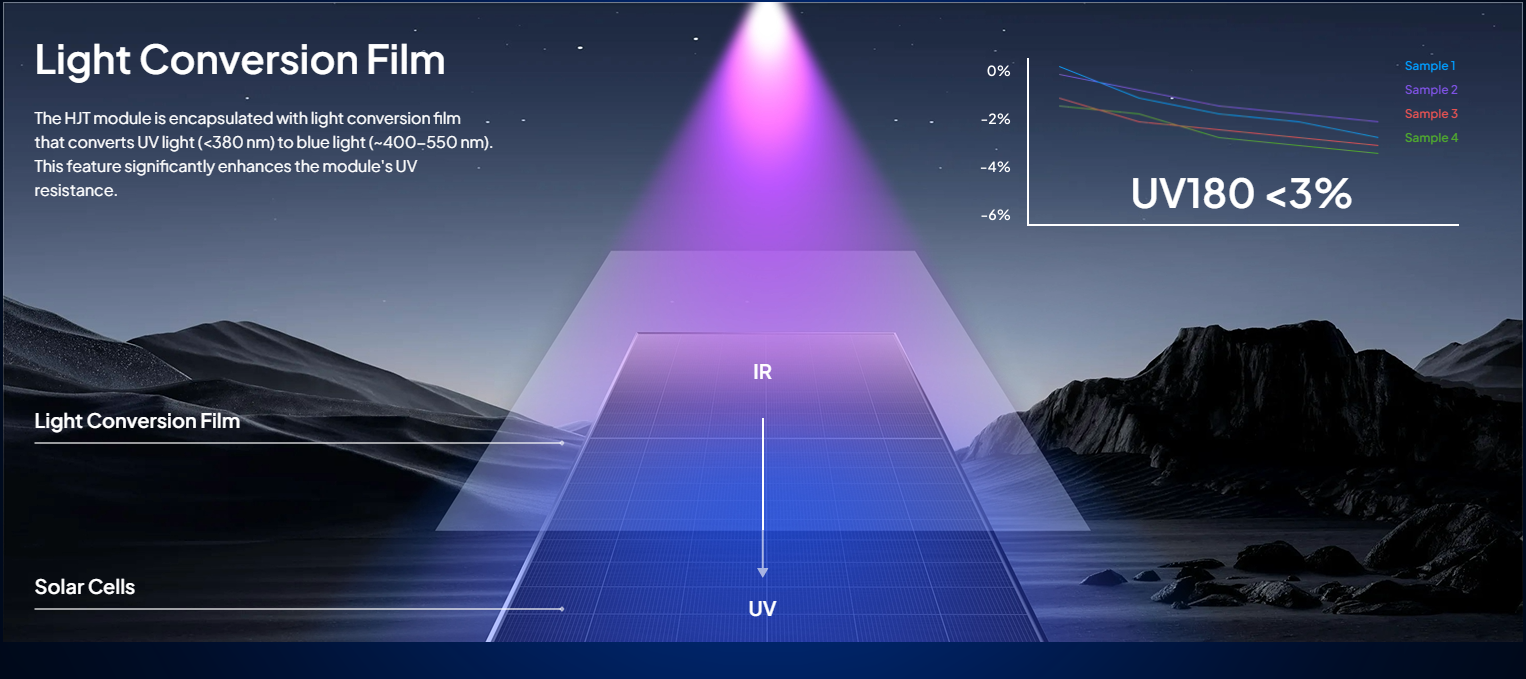
This process converts low-utilization, potentially harmful UV energy into photons that silicon solar cells can absorb more efficiently—shifting encapsulation from a purely protective role to one that also enhances energy generation.
✅Correct answer to Q1: B
Q2: Why are EVA-based LCF solutions commonly used in HJT modules?
A. Other materials disable conversion
B. EVA is the only option
C. For visual appearance
D. Best balance of cost and reliability
Proven reliability
EVA-based LCF, when engineered with optimized formulations and processes, can meet stringent IEC standards, including damp heat, UV exposure, and PID resistance. This ensures stable long-term performance under mainstream operating conditions.
Cost-performance advantage
As a mature encapsulation material, EVA benefits from strong supply chain availability and cost efficiency. This allows advanced LCF functionality to be implemented without significantly increasing system cost, supporting lower LCOE and improved project economics.
✅Correct answer to Q2: D
Q3: What is the primary value of LCF for PV system investors?
A. Simultaneously increases initial power output and long-term energy yield, enhancing total lifecycle generation
B. Improves module appearance
C. Eliminates transport and installation damage risks
D. Significantly improves performance under shading
Higher initial power output
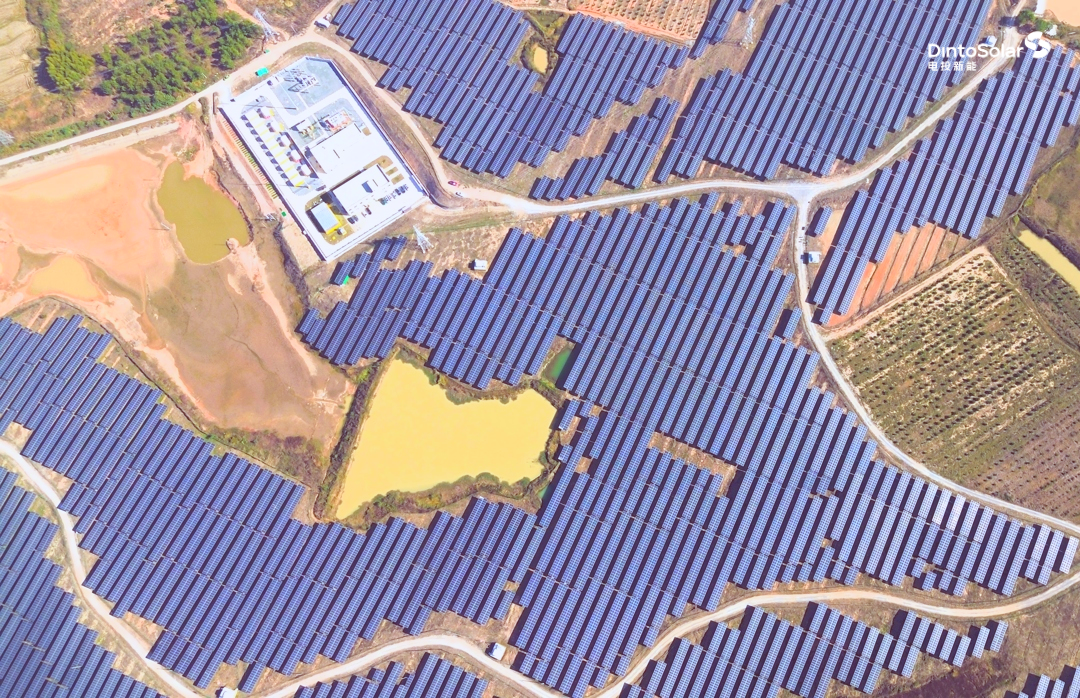
Modules integrated with LCF can deliver measurable power gains at the time of commissioning, providing stronger performance from day one.
Increased lifetime energy yield
Higher initial output combined with stable long-term performance translates into greater total energy generation over a typical 25-year operating period, improving project returns.
✅Correct answer to Q3: A
From Material Innovation to Bankable Returns
The selection of EVA-based LCF reflects a comprehensive balance between technical reliability, industrial scalability, and end-user value.
By integrating light conversion film into HJT modules, material-level innovation is translated into lower levelized cost of electricity (LCOE) and more predictable long-term energy yield—delivering tangible benefits for solar project investors.
We welcome you to share your own insights on heterojunction technology or let us know which HJT questions you would like us to explore next. Selected topics will be featured in future installments of Ask HJT.